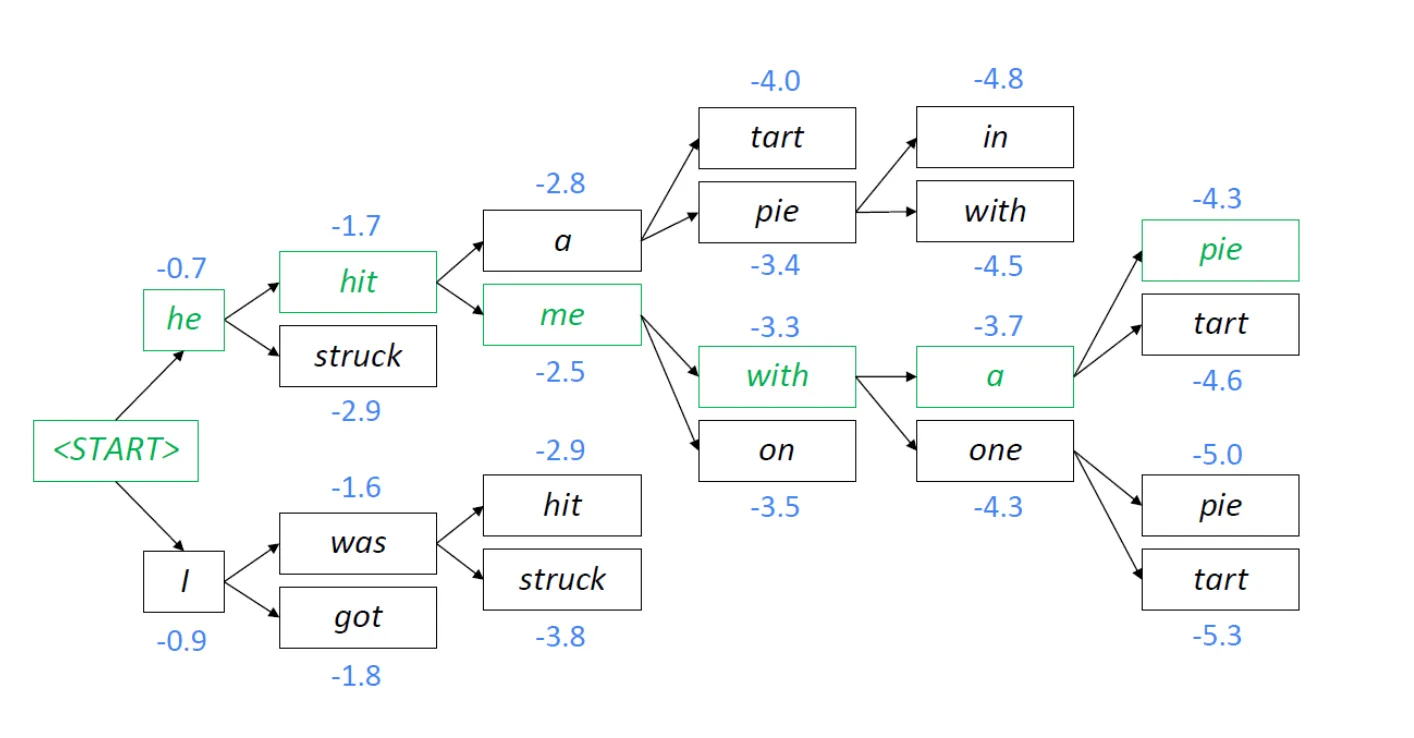
at each step, keep track of the k mos probable translation hypotheses (k, beam size)
examine the k most probable words for each hypothesis, compute their entire scores, keep k best ones
not guaranteed to find optimal solution, but more efficient than exhaustive search
it does not only take the best word, it rather takes the best B (user specified) and generates multiple hypothesis, which will then be evaluated and the best one at each step is chosen for the next ones
not guaranteed to find the optimal solution and is therefore an approximate search
problems:
when multiplying a lot of probabilities of very unlikely word (e.g. almost 0 but not exactly), the result will get very small and the system can no longer represent it. results in numerical underflow ⇒ instead of multiplying, summing the log of probabilities (more numerical stable)
if the sentence is very long, the probabilities get very low, therefore it rather takes smaller translations ⇒ normalize the output by the number of word in the translation (average of the log of each word)
how to choose beam width B?
the smaller, the fewer probabilities are considered (worse result, faster)
the larger, the more are considered, but the more computing expensive it is (better results, slower)